





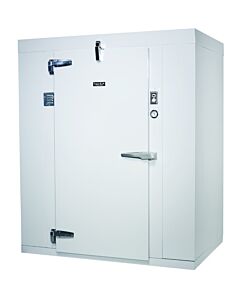
Frequently Asked Questions
What temperature range does a walk-in freezer maintain?
Commercial walk-in freezers typically hold between -10°F and 0°F, providing reliable frozen storage for proteins, doughs, ice cream, and other frozen inventory.
How does a walk-in freezer differ from a walk-in refrigerator in construction?
A walk-in freezer uses thicker insulated panels and a more powerful compressor to maintain sub-zero temperatures. Walk-in Refrigerators use thinner panels since they operate at higher temps.
Should I install a walk-in freezer as a standalone unit or a combo with a cooler?
Standalone walk-in freezers offer maximum frozen storage. Combination units with a shared wall between the freezer and cooler zones save space and reduce installation costs.
Can a walk-in freezer be expanded after initial installation?
Yes. Modular panel systems from Curtis let you expand a walk-in freezer by adding sections, so your investment grows with your business.
Which insulation thickness is best for a walk-in freezer?
Thicker insulation, typically 4 to 6 inches, is standard for walk-in freezers to prevent heat transfer at sub-zero temperatures. This keeps energy costs lower over time.
Are walk-in freezers available with floor panels?
Yes. Walk-in freezers often require insulated floor panels to prevent frost heaving, especially in ground-level installations where moisture from the slab can cause issues.
Do walk-in freezers require a dedicated electrical circuit?
Yes. Walk-in freezers draw significant power and need a dedicated circuit sized to the compressor and defrost system, which your electrician can specify based on the unit's requirements.

