 Free Shipping (On select items & orders)
  Track My Order


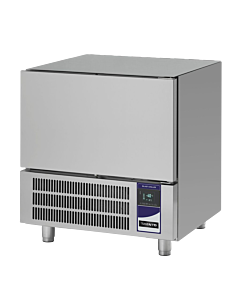
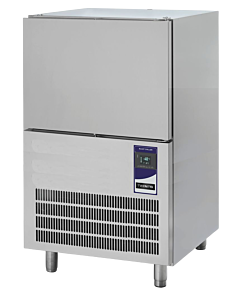
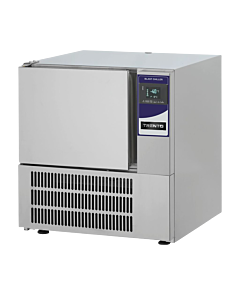
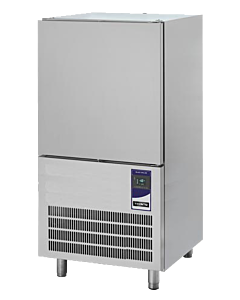
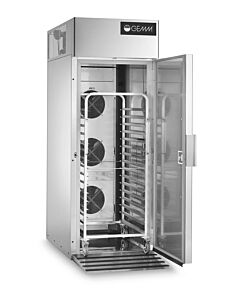
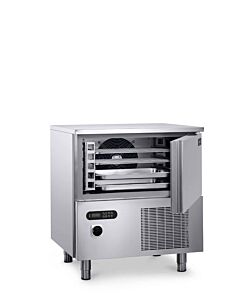
Eurodib BCB 05US Stainless Steel Blast Chiller 5 Trays Capacity 1865W - 208-2300V/60Hz UPC
SKU#: 70000-107USD $8,259.00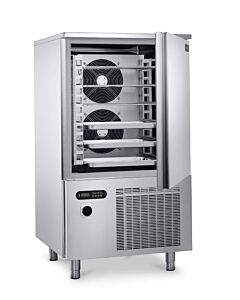
Eurodib BCB10US Stainless Steel Blast Chiller/Freezer 10 Trays Capacity 3105W - 230V/60/1
SKU#: 70000-108USD $10,599.00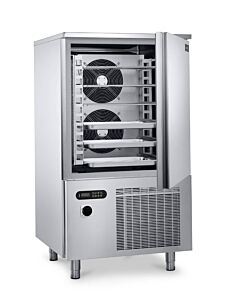
Eurodib BCB 15US Stainless Steel Blast Chiller 15 Trays Capacity 3815W - 230V/60/1
SKU#: 70000-109USD $14,999.00
Frequently Asked Questions
What is the main purpose of a blast chiller in a commercial kitchen?
A blast chiller rapidly drops cooked food from hot to cold within 90 minutes, preventing bacterial growth. This makes blast chillers essential for kitchens doing batch cooking and cook-chill programs.
How do I choose the right capacity blast chiller?
Match the blast chiller to your largest batch size. Smaller blast chillers handle 3 to 5 pans at a time, while full-size models process 10+ pans for high-volume production kitchens.
Should I use a blast chiller for ice cream and gelato production?
Yes. A blast chiller with a shock-freeze mode sets ice cream and gelato textures quickly, reducing crystallization. This makes blast chillers valuable for dessert-focused operations.
Can a blast chiller also function as a shock freezer?
Most commercial blast chillers include both blast chill and shock freeze modes, giving you flexibility to rapidly cool cooked food or freeze raw and prepared items in one unit.
Which blast chiller size works for a small catering kitchen?
A 3- to 5-pan countertop blast chiller suits small catering operations. Larger catering companies should consider floor-standing blast chillers with 10+ pan capacity.
Are blast chillers necessary for meeting HACCP food safety requirements?
Yes. Blast chillers help meet the HACCP requirement to move food through the temperature danger zone quickly. This is especially critical for kitchens preparing food ahead of service.
Do blast chillers connect to standard kitchen electrical circuits?
Some compact blast chillers run on standard 110V circuits, while larger models require 220V dedicated circuits. Check the electrical specs of your blast chiller before installation.

