 Free Shipping (On select items & orders)
  Track My Order





Frequently Asked Questions
What are Splitter Knives used for?
Splitting carcasses, mainly. With a long, heavy, stiff blade, Splitter Knives give the reach and force a cleaver's short blade can't, which makes them a butchery and meat-processing tool.
Which operations need Splitter Knives?
Butcher shops, abattoirs, and meat processors splitting whole or half carcasses get the use. Splitter Knives aren't for general kitchens working with portioned cuts. Match the tool to how much heavy breakdown you do.
Why use a splitter knife instead of a cleaver?
A splitter's long blade reaches across a carcass in one stroke, where a cleaver chops in sections. That reach and leverage is why Splitter Knives suit large-scale breakdown. A Cleavers pick still wins for short, bone-chopping work.
How heavy should Splitter Knives be?
Heavy enough to drive through bone, but balanced so a butcher can swing them repeatedly. The weight of Splitter Knives should match your daily volume. Too light wastes effort; too heavy tires the arm.
Are Splitter Knives overkill for a small butcher shop?
If you split carcasses, no. Even a small shop breaking down sides needs the reach. Shops buying primals or portioned meat can skip Splitter Knives. Decide by the size of what you process.
Do Splitter Knives need a non-slip handle?
Yes. Heavy chopping in a wet environment demands a secure grip, so a textured handle keeps Splitter Knives safe. Omcan builds processing blades with grippy handles. Never swing a heavy blade on a slick handle.
Can Splitter Knives handle poultry and seafood?
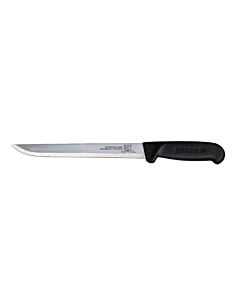
They're built for heavy red-meat work, so they're overkill on poultry and fish. Use lighter Seafood / Poultry / Splitter Knives for those, and keep Splitter Knives for large carcasses.

